

Hue Enamel Art – Colored Enamel on Metal, Imperial Heritage
Emerging in the early 19th century under the Nguyen dynasty, Hue Enamel Art is a unique form of fine art that combines metal with colored enamel. Considered a “one-of-a-kind” craft in Vietnam, it is both functional and a reflection of imperial elegance.
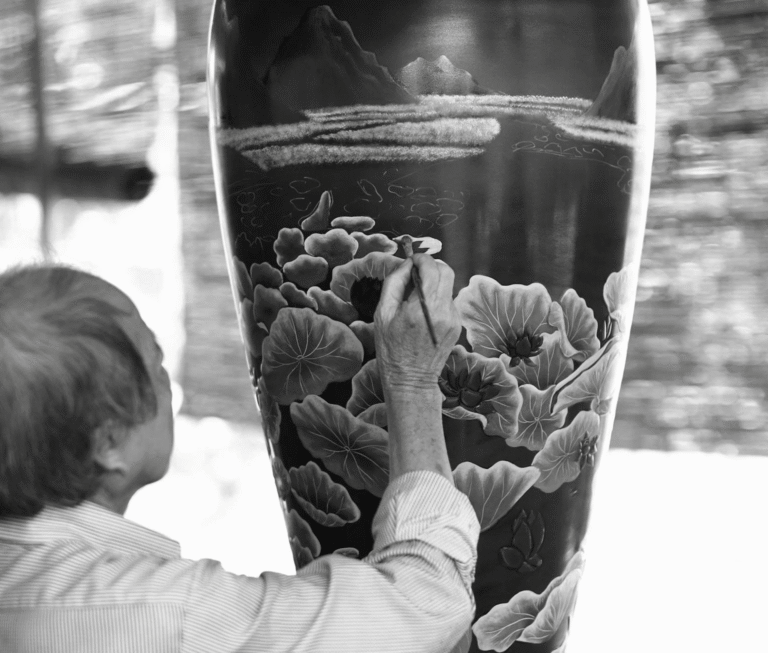
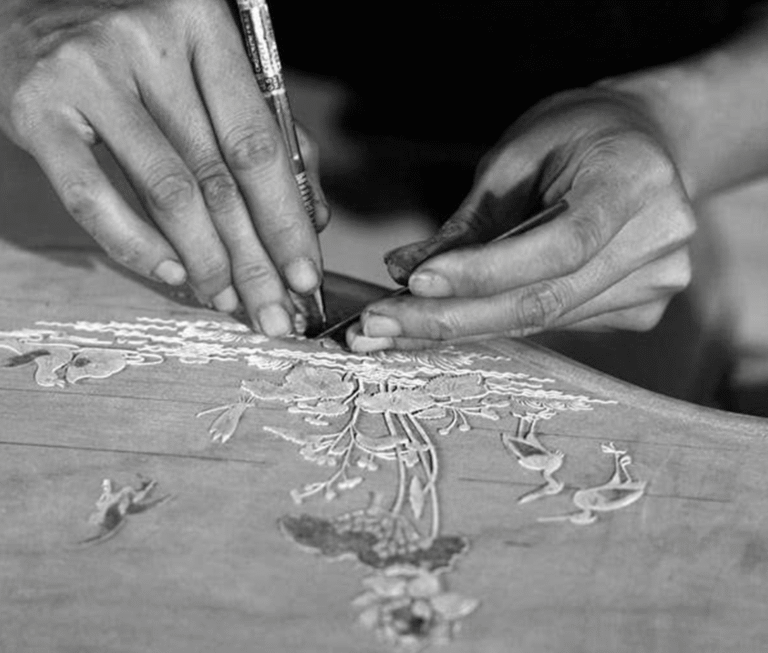
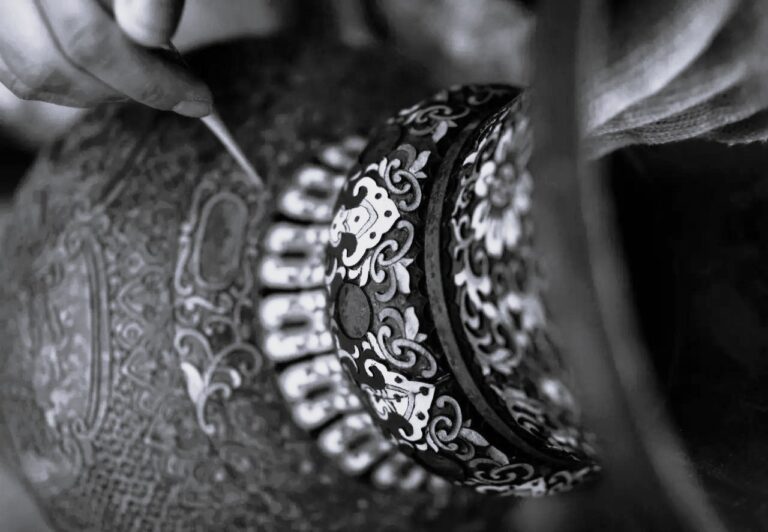
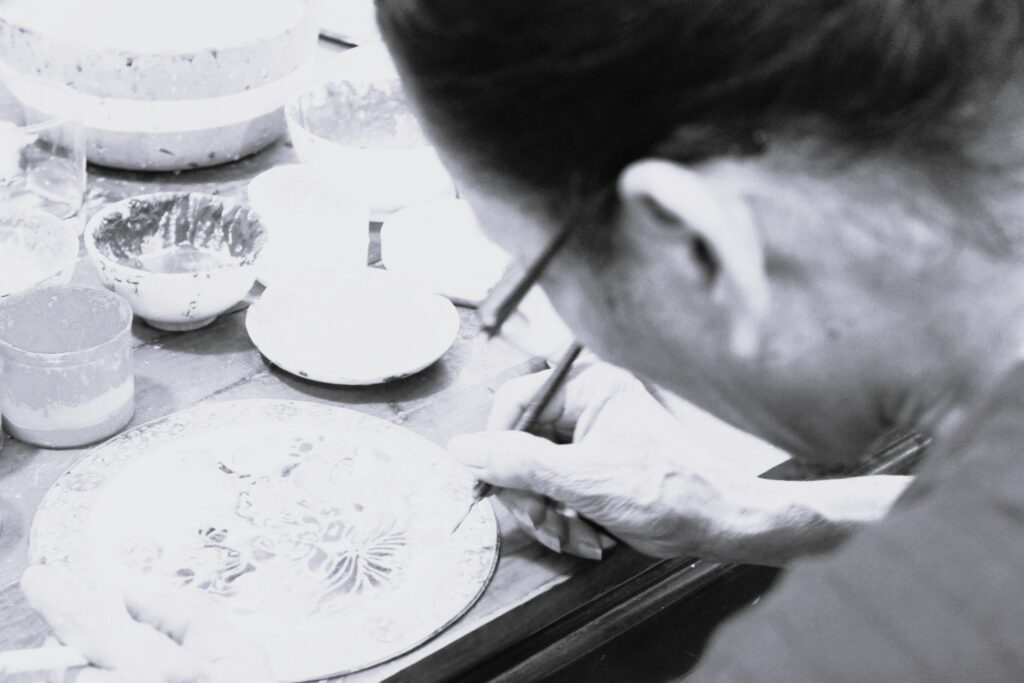
The Hue Enamel crafting process requires exceptional precision. The artisan first selects a base metal, usually copper or cast iron, then hammers and shapes it into items such as vases, incense burners, window panels, or railings. Next, they carve small recessed cells on the surface, each of which is filled with colored enamel. The enamel is made from mineral-based materials, producing vibrant and durable hues of blue, yellow, red, purple, and more.
After applying the enamel, the product undergoes multiple high-temperature firings to allow the enamel to flow evenly and adhere firmly to the metal. This process demands precise calculation by the artisan, as even a slight temperature variation can cause cracking or color changes. It is this meticulous technique that creates the characteristic glossy finish and mystical depth of Hue Enamel Art.
The beauty of Hue Enamel lies in its grandeur yet harmonious balance: vibrant colors that are striking without being ostentatious, imperial motifs intertwined with natural elements such as the Four Divine Beasts, Four Noble Plants, lotus, apricot, bamboo, and chrysanthemum. From the architectural works of the Hue Imperial Citadel to ceremonial objects, Hue Enamel conveys both the authority of the court and the pinnacle of 19th century Vietnamese fine arts.
Today, Hue Enamel is being restored and preserved as a unique cultural heritage, serving as a vivid testament to the skill and creativity of artisans from Hue.